
If you struggle with a racing mind, panic, or sleeplessness, you may have heard of using California poppy for anxiety.
Unlike its stronger cousin, the opium poppy, this gentle golden flower (Eschscholzia californica) is legal, non-addictive, and acts as a powerful nervine to soothe the nervous system in minutes.
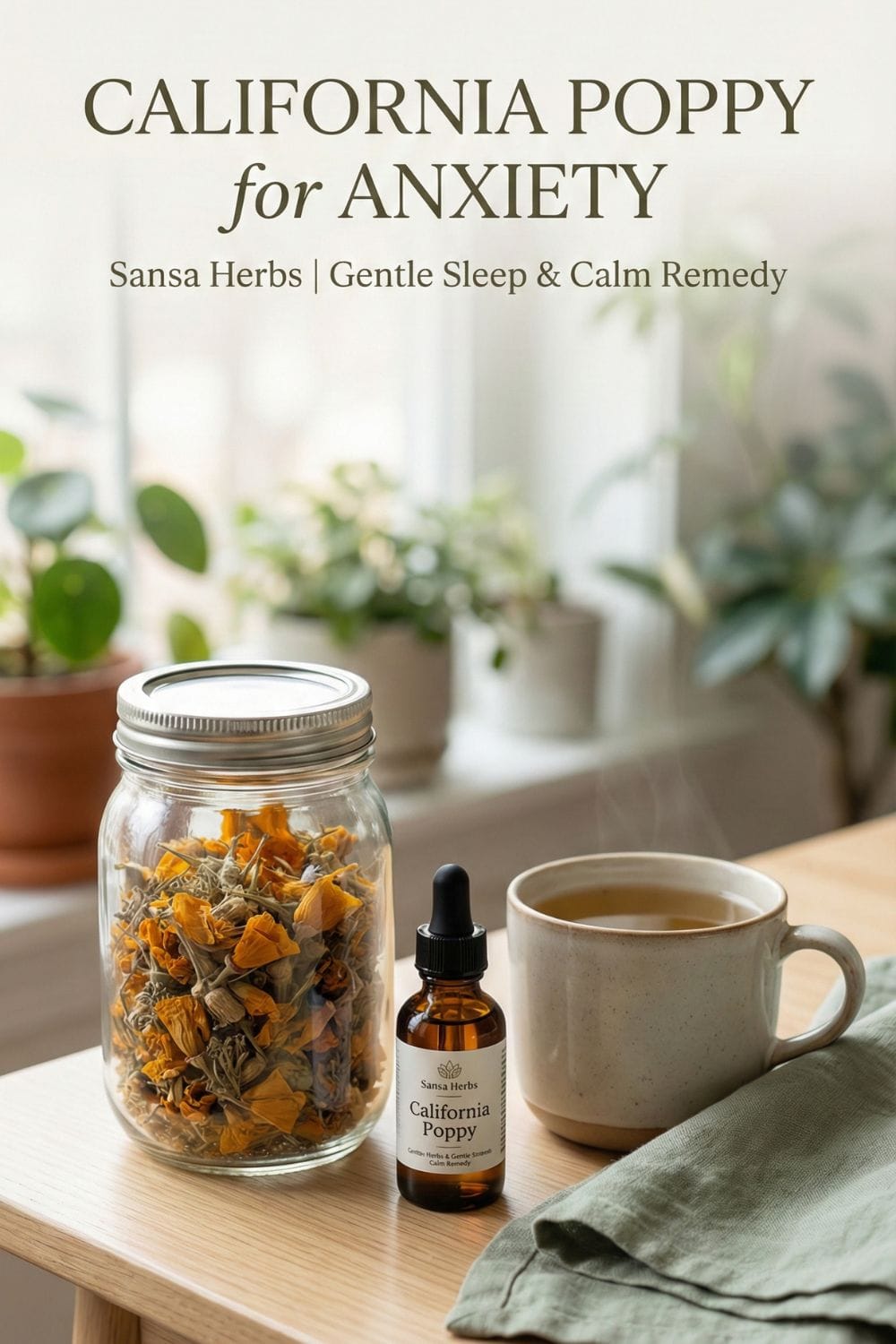
Does it work? Yes. Herbalists often call California Poppy a “gateway herb” because its effects are so palpable, people often feel a shift from anxious to relaxed within just a few minutes of taking it.
In this guide, you will learn how to use California poppy for anxiety, the correct dosage strategies (drops vs. droppers), and why it is the secret weapon for stopping nighttime coughs.
Garden Update: The freshest medicine is the kind you grow yourself.
The Medicinal Garden Kit includes California Poppy seeds (easy to grow!) plus 9 other healing plants.
Click here to get 10 premium herb seed packets + a FREE Herbal Guide!
Why Use California Poppy for Anxiety?
California Poppy is unique because it is both an anxiolytic (reduces anxiety) and a soporific (induces sleep).
While some herbs like Chamomile are very mild, California Poppy packs a tangible punch. It is traditionally used to clear “heat” and agitation from the mind, think of that irascible, stuck anger or the “road rage” feeling where you are just frustrated and can’t settle down.
Benefits Beyond Anxiety
- Insomnia Relief: It helps quiet the physical agitation that keeps you awake.
- Pain Relief (Analgesic): It is excellent for tooth pain and headaches.
- The “Spasmodic Cough” Hack: If you have a cough that only starts the moment you lay down to sleep, California Poppy is a specific remedy for stopping that spasm so you can rest.
How to Use California Poppy for Anxiety: Dosage & Methods
When using California poppy for anxiety, the method matters. You can drink it as tea, but most herbalists prefer a tincture (liquid extract) because the fresh plant makes better medicine than the dried plant.
1. The Tincture (Best for Panic/Sleep)
Because California Poppy tastes quite bitter, a tincture is the easiest way to take it.
- The “Micro-Dose” Strategy: For some people, just 3 to 5 drops is enough to shift the nervous system and act as a “meditation tool” to help you quiet your mind.
- The “Macro-Dose” Strategy: For deep pain or severe insomnia, others may need up to 5 ml (a teaspoon) to feel the sedative effects.
- Recommendation: Start small. Take 5 drops and wait 15 minutes. If you don’t feel a shift, increase the dose gradually.
2. The Tea (Good for Gentle Rituals)
You can brew dried aerial parts (leaves and flowers) into a tea. It will be bitter, so we recommend blending it with tasty, calming herbs like Lemon Balm or Mint to improve the flavor.
- Note: While fresh is best, dried aerial parts are widely available and still effective for mild relaxation.
Fresh vs. Dried: Does it Matter?
If you are buying supplements, you will usually find dried capsules or tinctures made from dried herbs.
- Expert Opinion: Expert herbalists like Benjamin Zappin prefer fresh plant tinctures (often making glycerites or alcohol extracts) because they capture the full spectrum of the plant’s sedating properties.
- Root vs. Flower: While the seeds and roots are arguably the strongest parts, the aerial parts (flowers and leaves) are what you will typically use to avoid killing the whole plant.
Grower’s Tip: This is why growing it yourself is so valuable!
To learn the trick to germinating these seeds (don’t bury them!), read our guide on How to Grow California Poppy from Seed.
You can harvest the fresh roots and flowers to make a tincture that is stronger than anything you can buy in a store.
How to Make a Fresh California Poppy Tincture (Expert Recipe)
While you can make tea, a fresh plant tincture is the “Gold Standard” for capturing this plant’s sedating alkaloids. Expert herbalist Benjamin Zappin recommends using a high-proof alcohol to extract the most potency from the fresh roots and leaves.
Ingredients
- Fresh California Poppy: Whole plant (flowers, leaves, and roots) if possible.
- High-Proof Alcohol: 95% alcohol (like Everclear) is ideal for fresh plants because the plant contains so much water. If you can’t get that, the highest proof Vodka you can find (at least 100 proof) is the next best choice.
The “Folk Method” Instructions
- Harvest: Pull up the whole plant (if you have plenty) or harvest a mix of leaves and flowers.
- Chop: Finely chop the fresh plant material immediately. Do not let it wilt or dry out.
- Fill: Pack a clean jar full of the chopped fresh herb.
- Pour: Cover the herb completely with your high-proof alcohol. The alcohol should sit about 1 inch above the plant material.
- Macerate: Seal the jar tight. Store it in a cool, dark cabinet for 4 to 6 weeks, shaking it daily.
- Strain: Strain out the plant material through cheesecloth. Bottled in amber glass, this tincture will last for 3+ years.
For the Pros (Weight-to-Volume Method): If you want precision, weigh your fresh herb.
For every 1 ounce of fresh herb, add 2 fluid ounces of alcohol (a 1:2 ratio).
This ensures a consistent potency every time you make it.
Safety & Side Effects
Is California poppy safe? Generally, yes. It is considered a safe, gentle herb for most adults.
- Grogginess: Some users report feeling groggy the next morning (similar to Valerian root), though many herbalists find they wake up feeling refreshed.
- Interactions: Because it is a sedative, be careful combining it with alcohol or prescription sleep aids.
California Poppy for Anxiety: FAQ
It is fast-acting. Many people report feeling “more relaxed” or “drowsy” within a few minutes of taking a tincture dose.
Yes, herbalists often formulate California Poppy with other sedatives like Valerian, Passionflower, or Hops for a stronger effect on sleep and pain.
No. Despite the name, it does not contain opium or opiates. It contains different alkaloids entirely and will not cause a positive result for opiates.
Ready to grow your own calm?
Get your Medicinal Garden Kit today and plant a patch of golden relief in your backyard!