
Chicory root for gut health is traditionally used to soothe bloating and support regularity because it is a rich, natural source of inulin fiber. Research suggests this prebiotic acts as a “fertilizer” for beneficial bacteria, making it an ideal caffeine-free coffee alternative for a healthier microbiome.
We all love the ritual of a warm cup, but the caffeine crashes and acidity often leave our stomachs in knots. Chicory root offers that same deep, roasted flavor but works in the opposite way: instead of irritating your gut, it helps heal it.
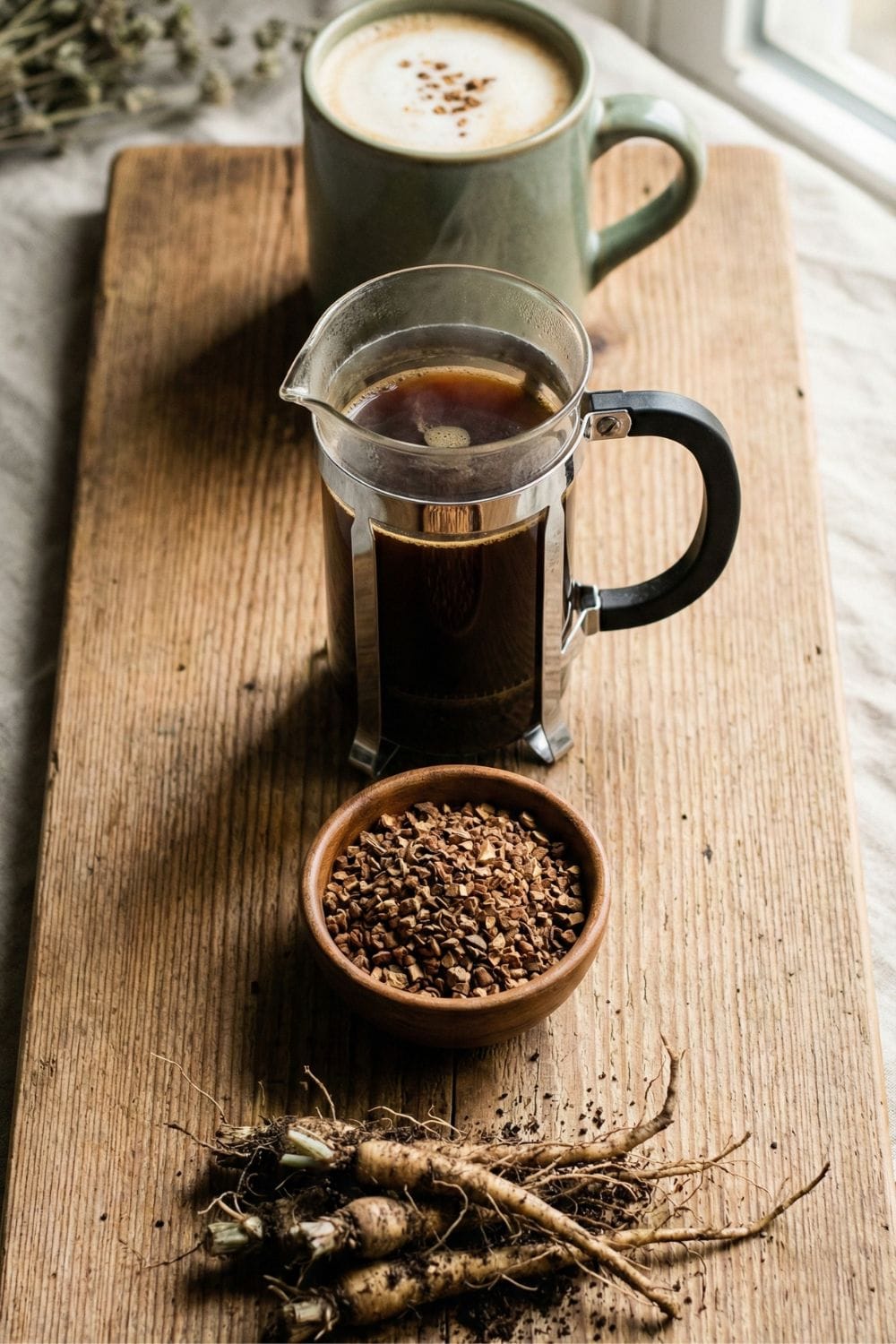
Packed with inulin, a powerful prebiotic fiber, chicory root feeds your good gut bacteria, improves regularity, and helps balance your blood sugar. In this guide, we explore the best ways to use chicory root for gut health, why it is the ultimate fertilizer for your microbiome, and how to brew it.
What Makes Chicory Root Special? (The Prebiotic Benefits)
Chicory (Cichorium intybus) is often seen growing as a roadside weed with electric blue flowers, but the real magic happens underground in its thick, fleshy taproot.
While the leaves are great in salads, the root is a powerhouse of inulin, a type of soluble fiber that makes up about 68% of the fresh root’s dry weight.
How Chicory Root Prebiotic Benefits Your Microbiome
While most foods nourish you, chicory root nourishes your gut bacteria. The root contains inulin, a type of soluble fiber that acts as a “fertilizer” for the probiotics in your digestive tract.
- Feeds Beneficial Bacteria: Inulin passes through the small intestine and ferments in the colon, feeding healthy Bifidobacteria.
- The CHIC Project Insights: Modern research from the Dutch CHIC Project shows that chicory is naturally resistant to pests, making it a “clean” source of food fibers that biochemists are now using to develop better medicines and gut-health solutions.
- Reduces Inflammation: As bacteria process the inulin, they produce short-chain fatty acids (SCFAs) that help repair the gut lining and reduce chronic bloating.
Grower’s Tip: The freshest, most potent inulin comes from roots you harvest yourself in the fall. You can easily grow your own supply with the Medicinal Herb Seed Kit, which includes high-germination Chicory seeds ready for your garden.
Is Chicory Root Good for IBS and Bloating?
When using chicory root for gut health issues like constipation, consistency is key to seeing results. Research confirms that daily consumption of chicory inulin helps soften stools and significantly increases frequency for those with chronic constipation.
Clinical trials have shown that consistent intake (around 12g per day) is highly effective for improving regularity.
However, there is a nuance you need to know.
The “Adjustment Period”
Because chicory is so rich in fiber, it works very well, sometimes too well at first. If you introduce a massive amount of prebiotics to a gut that isn’t used to them, you might experience temporary gas or rumbling.
- For General Bloating: It is excellent for keeping things moving and reducing long-term bloating caused by constipation.
- For Sensitive Stomachs: If you have severe IBS (specifically SIBO), introduce it slowly. Your gut bacteria need time to adjust to the new food source.
Chicory Root Prebiotic Dosage for Bloating and Constipation
When using chicory root for regularity, consistency is key. Clinical trials show that a daily intake of around 12g of inulin is highly effective. To avoid gas during the “adjustment period,” use the “Start Low, Go Slow” rule:
- Week 1: Use ½ teaspoon of roasted root granules per cup.
- Week 2: Increase to 1 teaspoon as your microbiome adjusts.
- Maintenance: 1 tablespoon daily is the “sweet spot” for most people.
Why it Beats the Caffeine Crash
Many people suffer from “coffee-induced” stomach pain. Traditional coffee is highly acidic and spikes cortisol. Chicory root is naturally alkaline and caffeine-free. It provides a roasted flavor that stabilizes blood sugar rather than spiking it, making it a kinder choice for your adrenals.
How to Use Chicory Root for Digestion
The easiest way to make chicory a daily habit is to drink it. You can brew roasted chicory root exactly like coffee, in a French press, a drip machine, or even a tea ball.
Watch: How to Brew Your Gut-Healing Chicory Latte
Recipe: The “Gut-Healing” Latte

- Original French Market Coffee Stand coffee
- Coffee and Chicory. Can contains 15oz of ground Cafe Du Monde Coffee
- This popular New Orleans landmark has been located in the French Market since the early 1860’s.
This creamy, caffeine-free drink is perfect for soothing a nervous stomach in the morning.
Ingredients:
- 1 tsp Roasted Chicory Root (Homegrown or store-bought)
- 1 cup Boiling Water
- ¼ cup Oat Milk (or your preferred dairy-free option)
- 1 dash Cinnamon (helps stabilize blood sugar)
- 1 tsp Honey or Maple Syrup (optional)
Instructions:
- Steep the chicory root in boiling water for 5–10 minutes. The longer it steeps, the darker and more “coffee-like” it becomes.
- Strain the liquid into your favorite mug.
- Froth the warm oat milk and pour it over the top.
- Sprinkle with cinnamon and sip slowly.
Growing Your Own “Medicine Cabinet”
While you can buy roasted chicory on Amazon, there is nothing quite like pulling your own medicine out of the dirt.
Chicory is incredibly hardy, it actually thrives in poor, compacted soil where other plants fail.
If you want to harvest your own roots for coffee, you need to know exactly when to dig them up for maximum inulin content.
Read our full guide: How to Grow Chicory from Seed
- Planting: Sow seeds in spring or late summer.
- Harvesting: Dig up the roots in the fall (after the first frost is best) when the inulin levels are highest.
- Roasting: Scrub the roots, chop them into small cubes, and roast at 350°F (175°C) until they turn dark brown and smell like chocolatey coffee.
Ready to start? The Medicinal Herb Seed Kit contains everything you need to grow Chicory alongside 9 other powerful remedies like Calendula and Echinacea.
Chicory Root for Gut Health FAQ’s
Does chicory root make you poop?
Chicory root inulin side effects: who should avoid it?
How does chicory help with bloating?
Conclusion: Your First Step Toward Self-Reliance
Success with growing chicory from seed is a lesson in patience, but the reward is worth it. When you pull that deep taproot from the soil and roast it into a rich, dark coffee substitute, you aren’t just making a drink, you are reclaiming a piece of your independence.
However, a complete herbal wellness garden needs more than just a coffee alternative. Chicory is just one of the 10 essential plants every self-reliant home should have.
Build Your Complete Pharmacy: If you want to know what to plant alongside your chicory to cover everything from immunity to deep sleep, check out the full Medicinal Garden Kit. It contains the 10 most powerful seeds to turn your backyard into a true survival asset.
Safety & Trust Reminder: While research suggests chicory root may support gut health, anyone with medical conditions, those who are pregnant or breastfeeding, or those taking medications should speak with a healthcare professional before starting new supplements. Avoid strong medical claims; herbs are traditionally used to support the body’s natural processes.