
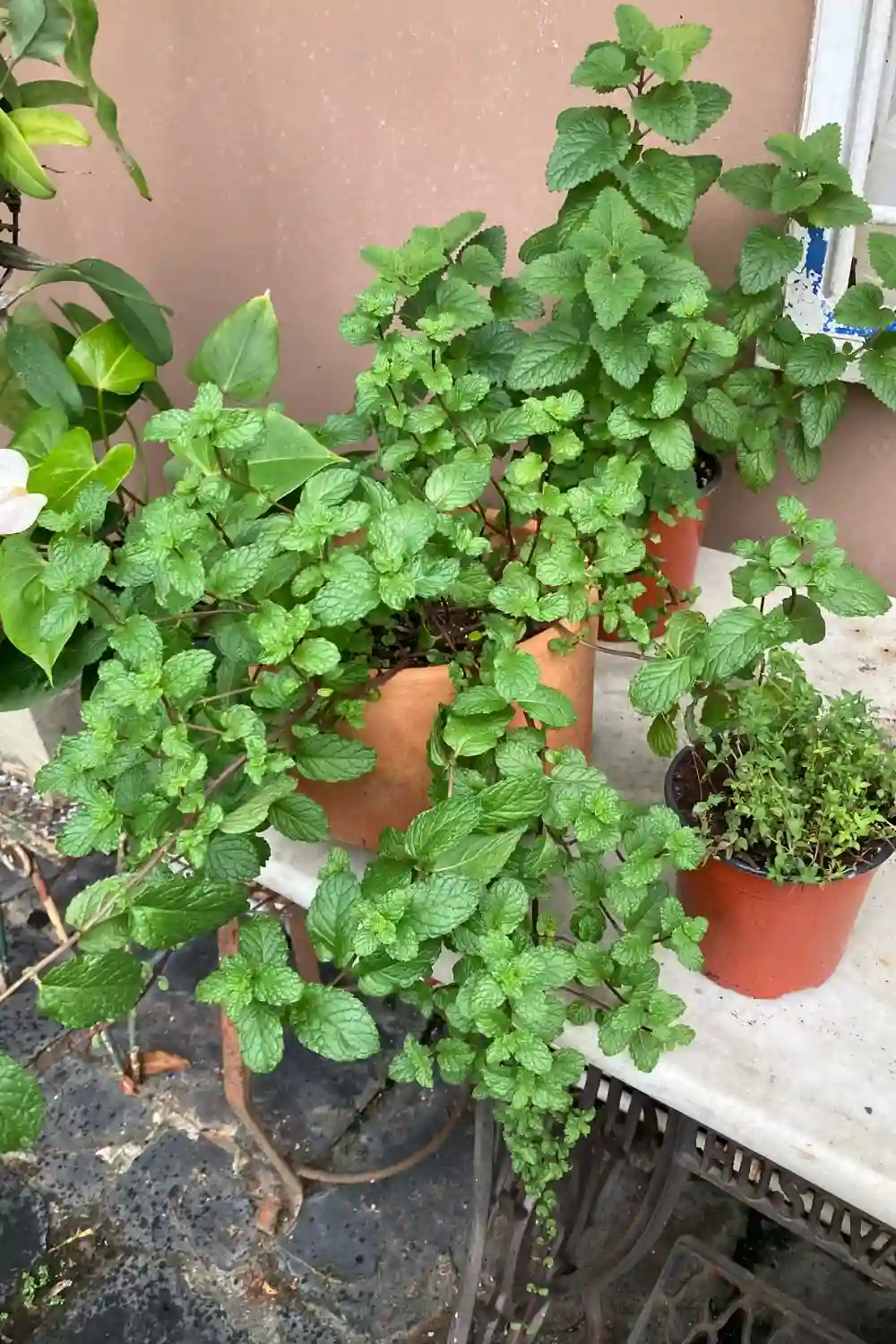
Peppermint is one of the easiest herbs to keep close to the kitchen, and growing it in a pot is often the simplest way to manage its vigorous spreading habit. A container gives the roots room to grow while keeping the plant from taking over nearby beds.
This guide covers how to grow peppermint in pots, from choosing the right container and soil to watering, light, pruning, harvesting, and keeping the plant productive in warm climates.
Why Grow Peppermint in a Pot?
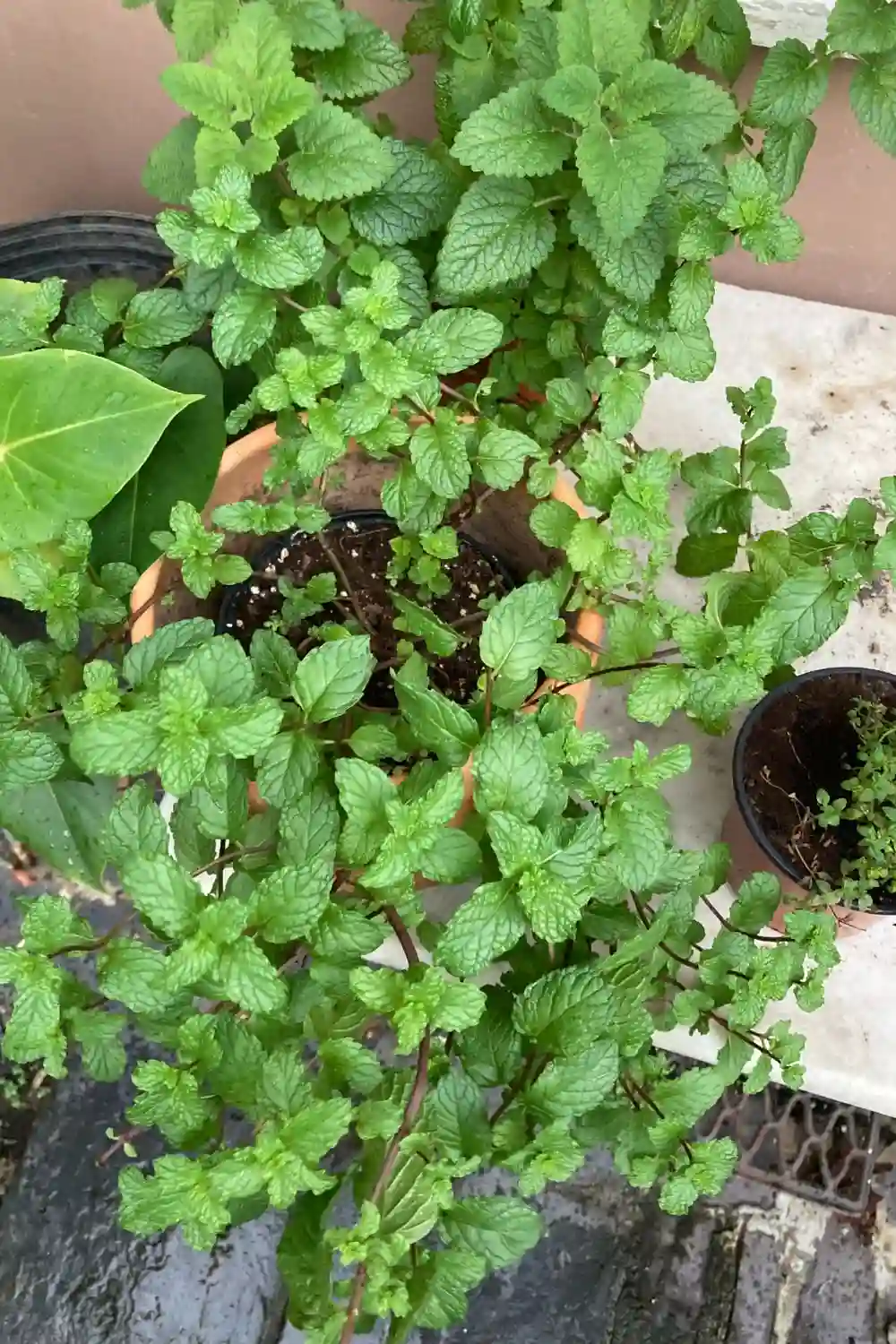
Peppermint spreads through underground runners, so it can move quickly through a garden bed. Growing it in a container keeps that growth easier to control and also makes it simple to move the plant when the weather changes.
- Keeps spreading roots contained
- Works well on patios, balconies, and small spaces
- Makes harvesting convenient
- Lets you adjust sun exposure more easily
- Can be moved into brighter or shadier conditions as needed
Choosing a Pot for Peppermint
Choose a pot with drainage holes and enough width for the plant to spread. A container around 10 to 12 inches wide is a practical starting size for one plant, although a larger pot will hold moisture longer and give the roots more room.
Terracotta dries more quickly, while plastic or glazed pots hold moisture longer. In hot weather, that difference can matter, so choose the material that best suits how often you are able to water.
Best Soil for Peppermint in Containers
Peppermint grows best in a loose potting mix that holds some moisture but still drains well. Avoid heavy garden soil in containers because it can compact and stay waterlogged.
A quality all-purpose potting mix is usually enough. If your mix dries very quickly, adding organic matter such as compost can help it retain moisture without becoming dense.
If you are working on your container mix, see my potting soil guide for more help choosing a mix for herbs.
How Much Sun Does Peppermint Need?
Peppermint grows well with bright light and some direct sun, but it does not need to bake in intense afternoon heat. In very hot climates, morning sun with afternoon shade can help keep the leaves from looking stressed.
If you are growing peppermint indoors, place it near a bright window. If natural light is limited, a small grow light can help. My grow light guide for herbs covers what to look for.
How to Grow Peppermint in Pots
- Fill the container with fresh potting mix, leaving a little room at the top.
- Plant the peppermint at roughly the same depth it was growing before.
- Firm the soil gently around the roots.
- Water thoroughly until excess water drains from the bottom.
- Place the pot in bright light and keep the soil evenly moist while the plant settles in.
Growing Peppermint from Seed
Peppermint can be started from seed, although germination and seedling growth take longer than starting with a rooted plant or cutting. Sow the seeds on the surface of moist seed-starting mix and press them in lightly rather than burying them deeply.
Keep the surface consistently moist while the seeds germinate. Once the seedlings are large enough to handle and have developed several true leaves, they can be moved into their final container.
Affiliate disclosure: As an Amazon Associate I earn from qualifying purchases.
How Often to Water Peppermint
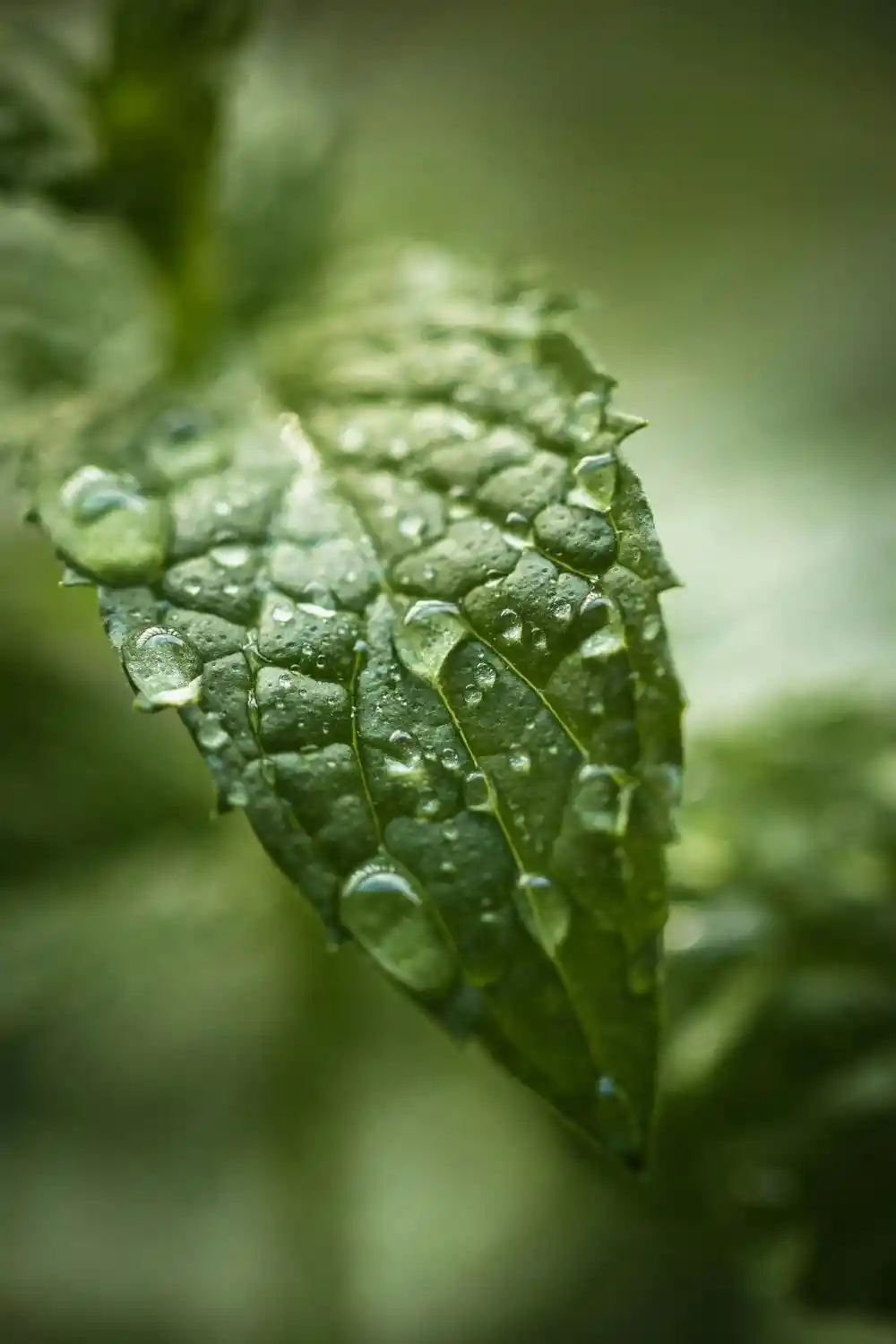
Peppermint prefers soil that stays lightly and consistently moist. Check the pot regularly, especially during hot or windy weather when containers can dry much faster than garden beds.
Water when the upper layer of soil begins to feel dry. Water deeply enough that some moisture drains from the bottom, then allow the excess to drain away rather than leaving the pot sitting in water.
Feeding Peppermint in Pots
Peppermint does not need heavy feeding. If the potting mix already contains nutrients, you may not need to fertilize immediately. During active growth, a light feeding with a balanced fertilizer can be used if the leaves become pale or growth slows.
Too much fertilizer can encourage lots of soft growth, so more is not always better.
Pruning and Harvesting Peppermint
Regular harvesting helps peppermint stay bushy. Snip stems just above a pair of leaves rather than removing only individual leaves. This encourages branching and gives you fuller growth over time.
- Harvest a few stems at a time once the plant is established.
- Pinch back long, leggy stems to encourage branching.
- Remove damaged or yellowing leaves.
- Trim flower stalks if you want the plant to keep putting more energy into leafy growth.
Growing Peppermint in Hot and Tropical Climates
In warm climates, the biggest challenges are usually heat and moisture loss from the pot. Peppermint often appreciates protection from the strongest afternoon sun, especially when grown in a smaller container. You can also browse my tropical herb growing guides for more warm-climate growing ideas.
Watch the soil closely during very hot periods and move the pot to a spot with bright morning light and afternoon shade if the leaves begin to droop or scorch despite adequate watering.
Common Peppermint Problems
Leaves Turning Yellow
Yellow leaves can be caused by overly wet soil, poor drainage, low light, or depleted potting mix. Check the moisture level first and make sure excess water can escape from the container.
Leggy Growth
Long stems with wide gaps between leaves often mean the plant needs brighter light or more frequent pruning.
Dry or Crispy Leaves
This can happen when the pot dries too quickly or the plant receives intense heat for too long. Check the root zone and adjust the light exposure if needed.
Can Peppermint Grow Indoors?
Yes. Peppermint can grow indoors as long as it receives enough light and the pot has good drainage. Keep it near a bright window and rotate the container occasionally so growth stays even. If natural light is limited, see my guide to the best grow lights for herbs.
Will Peppermint Come Back Every Year?
As peppermint fills its container, growth may slow and the pot can become crowded with roots. When that happens, divide the plant or move part of it into fresh potting mix. This is also an easy way to make another peppermint pot without starting again from seed.
More Herb Growing Guides
For more practical container-growing help, browse the Sansa Herbs Growing Guides or see my essential herb gardening tools.
Final Thoughts
Learning how to grow peppermint in pots is simple once you give the plant three things it consistently needs: good drainage, regular moisture, and enough light without excessive heat. Keeping it in a container also makes this vigorous herb much easier to manage, especially in a small garden, balcony, or patio.