A practical guide to choosing and mixing potting soil for herbs grown in pots and small spaces.
A good container garden starts with what you put around the roots.
When you’re growing herbs in pots, planters or other small spaces, the growing medium needs to do several jobs at once. It needs to hold enough moisture for the plant, allow excess water to drain away, and leave enough air space around the roots.
That is why ordinary garden soil isn’t always the best choice for containers. A quality potting mix is lighter and designed to provide the drainage and aeration that container-grown plants need.
Here at Sansa Herbs, I’m especially interested in practical container gardening, because you don’t need a huge garden to grow useful herbs. A few well-chosen containers can give you fresh herbs right outside the kitchen.
This guide explains what goes into a good herb potting mix and gives you a simple recipe to make at home.
Potting Soil vs Garden Soil
One of the easiest mistakes to make when planting a container is to fill it with soil from the garden.
Garden soil is designed for plants growing in the ground. In a container, it can become too heavy and compact, making it harder for air and water to move through the root zone.
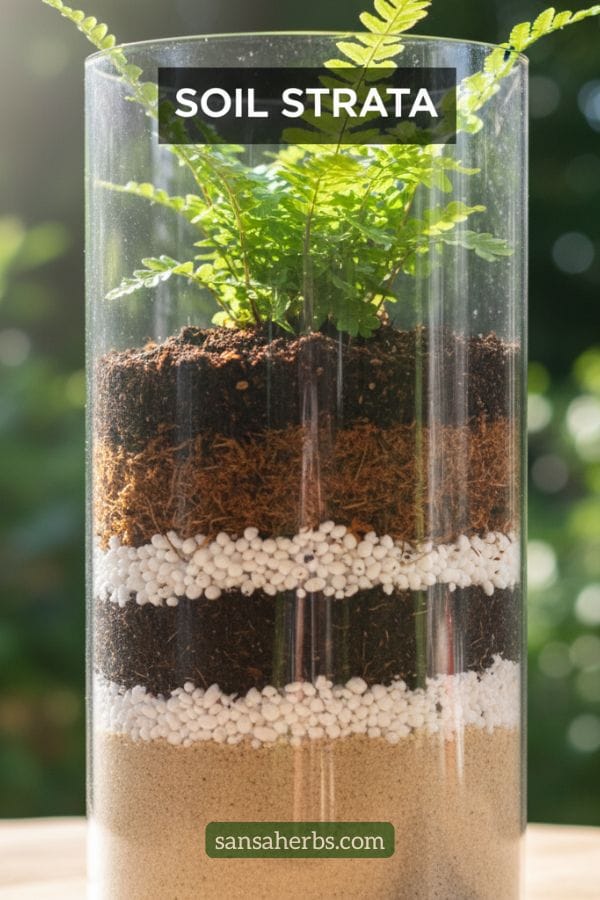
Potting mixes are made specifically for containers. Depending on the product, they may contain materials such as coconut coir, peat, perlite, vermiculite, composted bark and other organic materials.
You will also see the terms potting soil and potting mix used almost interchangeably. The name on the bag matters less than the ingredients and whether the product is intended for container growing.
Simple rule:For most herb containers, start with a quality potting mix made for containers rather than ordinary garden soil.
For more information about choosing a suitable growing medium for containers, see this guide to potting soil and growing media from the University of Minnesota Extension.
What a Good Herb Potting Mix Needs
There isn’t one perfect soil recipe for every plant. Different herbs have different preferences, and your climate, container and watering habits matter too.
A useful general-purpose herb mix should provide:
- Good drainage so excess water can move away from the roots.
- Air space so the root zone does not become dense and waterlogged.
- Moisture retention so the mix does not dry out immediately.
- Physical support to hold the plant upright.
- Some nutrient-holding capacity because a container is a relatively small growing environment.
Herbs also vary in how much moisture they like. Rosemary and thyme generally prefer a mix that drains well and is allowed to dry somewhat between waterings, while herbs such as mint and lemon balm appreciate more consistent moisture.
That is why a good basic mix is better thought of as a starting point rather than a rigid formula.
The Ingredients
Potting Mix
This forms the main body of the recipe. Choose a quality commercial potting mix intended for containers.
Check the label before buying. Many commercial mixes already contain a combination of materials such as coir or peat, perlite, composted materials and fertilizer. If your mix already contains plenty of these ingredients, you may not need to add much more.
Coco Coir
Coco coir is made from coconut husks and is commonly used in container growing media. It helps the mix hold moisture while keeping the growing medium relatively light.
Compressed coco coir needs to be rehydrated before you mix it. Once expanded, it is much easier to measure and distribute evenly through the potting mix.
Perlite
Perlite is a lightweight material commonly added to potting mixes to increase air space and improve drainage. It is particularly useful when you want a mix that stays loose rather than becoming dense and compacted.
Worm Castings
Worm castings are optional. They can add organic matter and nutrients to a container mix, but you do not necessarily need them if your commercial potting mix already contains compost or fertilizer.
If you add worm castings, use them as part of the overall mix rather than assuming more is always better.
Our Simple Herb Potting Mix Recipe
General Container Herb Mix
2 parts potting mix
1 part coco coir
1 part perlite
½ part worm castings, optional
For a small batch, you could use:
- 2 cups potting mix
- 1 cup coco coir
- 1 cup perlite
- ½ cup worm castings, optional
The important thing is to use the same measuring container for each part.
This is not a universal recipe for every herb or every container. Think of it as a practical starting mix for a general container herb garden. You can adjust the ingredients depending on what you are growing and how quickly the container dries out.
How to Mix It
- Rehydrate the coco coir. If you are using a compressed brick, add water according to the product instructions and allow it to expand.
- Measure your ingredients. Use the same cup, scoop or container for each part.
- Combine everything in a clean bucket or tub. A shallow container makes mixing easier.
- Mix thoroughly. Break up any clumps and distribute the perlite and coir evenly.
- Check the texture. The finished mix should feel light and crumbly. It should hold some moisture without becoming soggy.
- Fill your container. Make sure the container has drainage holes and avoid packing the mix down tightly.
A container’s drainage holes are just as important as the mix itself. Water needs a way to leave the container so that the root zone does not stay saturated.
Choosing a Mix for Different Herbs
Once you understand the basic mix, you can make small adjustments based on the herb you’re growing.
Herbs That Prefer Excellent Drainage
Rosemary, thyme, oregano and lavender generally prefer a well-drained growing medium and should not be kept constantly wet.
For these herbs, drainage and watering habits may matter more than adding extra moisture-retaining material.
Herbs That Like More Consistent Moisture
Mint and lemon balm are examples of herbs that generally appreciate more consistent moisture.
Culantro is another herb worth thinking about if you garden in Trinidad and Tobago.
Culantro is a popular seasoning herb here, and growing it in a container makes it easy to keep a supply close to the kitchen. I grow culantro in a container myself, so I will be sharing a separate guide covering how I grow it, what I have learned and how to use the fresh leaves in the kitchen.
Coming soon: How to Grow Culantro in a Container
Potting Mix for Seedlings
The mix you use for an established herb does not necessarily need to be the same mix you use for starting seeds.
Seeds and young seedlings benefit from a finer, lighter growing medium that allows their developing roots to establish easily.
If you are starting herbs from seed, look for a seed-starting mix or another fine-textured growing medium designed for propagation.
Once the seedlings are established and ready for their next container, you can move them into a more substantial potting mix.
Potting Soil vs Raised Bed Soil
Container gardening and raised-bed gardening have different requirements.
A container has a relatively small volume of growing medium, so drainage, aeration and moisture balance are especially important. A raised bed has much more growing space and behaves more like a garden environment.
That is why you should not automatically fill a raised bed with bags of potting mix. The best growing medium depends on the size and construction of the bed and whether it is built over existing ground or completely filled above ground.
If you are planning a raised bed, start here:
Best Raised Garden Beds for Small Spaces →
Common Potting Soil Mistakes
- Using ordinary garden soil in a small container. It can become too dense and restrict air and water movement.
- Using a container without drainage holes. Even a good potting mix cannot compensate for nowhere for excess water to escape.
- Packing the mix down tightly. Keep the growing medium loose enough for air and water to move through it.
- Watering every herb on the same schedule. Different herbs have different moisture requirements.
- Adding too many ingredients. A complicated recipe is not automatically a better recipe.
- Assuming the same mix will work forever. Container media break down over time and may need refreshing or replacing.
When Should You Refresh Container Mix?
You do not necessarily need to throw out container mix on a fixed schedule.
Instead, look at the condition of the growing medium and the plant.
It may be time to refresh the mix if:
- the mix has become dense or compacted
- water no longer moves through it normally
- the plant has outgrown its container
- the roots have filled the pot
- the growing medium has broken down substantially
- you are repotting the plant into a larger container
If a container mix is still in good condition, you may simply need to top it up or combine some of the old material with fresh growing medium when repotting.
What Do You Need?
You do not need a huge collection of supplies to make your own herb potting mix.
- Quality potting mix
- Coco coir
- Perlite
- Worm castings, optional
- A clean bucket or mixing tub
- A scoop or measuring container
- A container with drainage holes
I’ve put together the garden supplies I find most useful here:
The Herb Gardener’s Essential Toolkit →
Keep It Simple
You don’t need to create an elaborate soil recipe to grow herbs successfully.
Start with a good container potting mix, add materials that improve the balance of moisture and air, and pay attention to what the individual herb actually needs.
For a general container herb garden, my starting mix is:
2 parts potting mix + 1 part coco coir + 1 part perlite + ½ part worm castings if needed.
Then adjust your approach based on the plants you’re growing and the conditions in your garden.
And if you’re gardening in a small space, remember that a few containers can go a surprisingly long way. You can grow the herbs you actually use, harvest them when you need them, and keep building from there.