
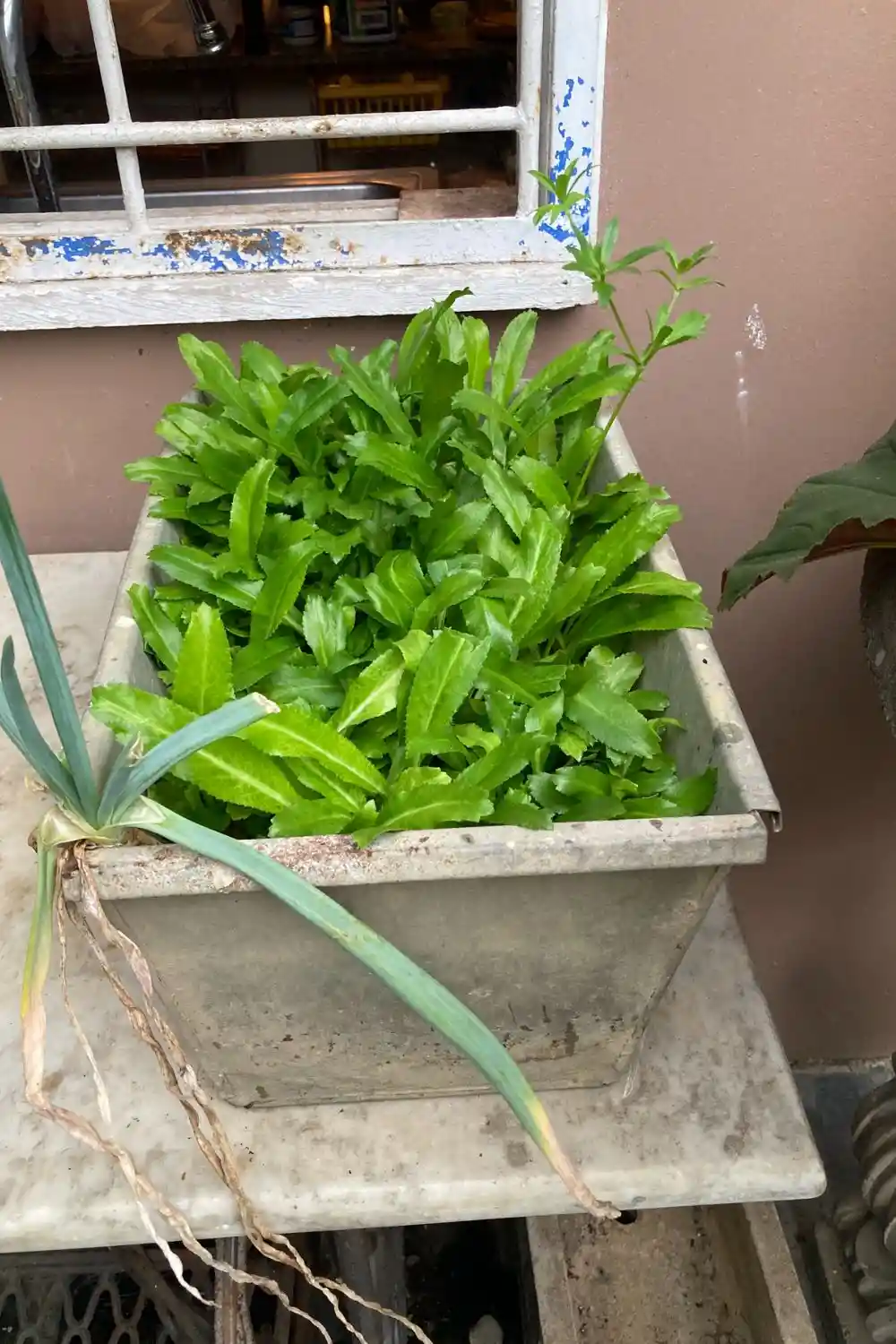
Culantro (Eryngium foetidum), known locally in Trinidad and Tobago as shadow benny, shado beni, or bandhania, is one of those herbs that makes perfect sense for a warm-climate container garden. I grow shado beni here in Trinidad, where it is a familiar herb in Caribbean cooking and easy to grow in relatively little space.
It has a strong flavor similar to cilantro, but the plants look completely different. Culantro grows as a low rosette of long, saw-toothed leaves rather than the soft, parsley-like foliage of cilantro.
Culantro is especially useful for small-space gardeners because it grows well in pots and actually prefers some protection from intense sun. If you have struggled to keep cilantro leafy in hot weather, culantro is worth trying.
What Is Culantro or Shadow Benny?
Culantro is a tropical herb in the carrot family. It is widely grown throughout the Caribbean and Central America and is also known as recao, sawtooth coriander, long coriander and shadow beni.
Although culantro and cilantro have a similar aroma and can be used in some of the same dishes, they are different plants.
Culantro forms a low rosette of long, serrated leaves, while cilantro develops delicate leaves on upright stems and tends to flower quickly in hot weather.
For additional information about the plant, you can also see the University of Florida IFAS culantro growing guide.
Why Grow Culantro in a Container?
Culantro works very well in containers.
A pot lets you control the soil and moisture more easily, and you can move the plant if a particular spot becomes too hot or sunny.
That makes culantro a good choice for:
- Patios
- Balconies
- Small backyards
- Doorstep herb gardens
- Container gardens
- Tropical and subtropical climates
Growing it in a pot also makes harvesting easy because the leaves stay within reach.
How to Grow Culantro in Containers
Choose a Container With Drainage
Use a container with drainage holes so excess water can escape.
Culantro likes consistent moisture, but the roots should not remain in stagnant water.
A medium-sized pot gives the leaves room to spread while still being small enough to move around the garden.
If you are setting up several herbs in pots, my Essential Herb Gardening Tools page covers containers, labels, watering tools and other supplies that are useful for container gardening.
Use a Moisture-Retentive Potting Mix
Culantro grows best in soil that stays reasonably moist without becoming heavy and waterlogged.
A good container mix should:
- Hold some moisture
- Drain excess water
- Allow air around the roots
- Remain loose rather than compacted
If you are mixing your own soil, see my guide to potting soil for herbs for a simple container mix.
How Much Sun Does Culantro Need?
Culantro generally performs better with partial shade than with harsh, all-day tropical sun.
In a hot climate such as Trinidad, intense afternoon sun can stress the plant and encourage it to flower earlier.
A location with morning sun and afternoon shade usually works well.
Bright filtered light can also be suitable.
This is one reason I like growing culantro in containers. If the plant looks stressed in one location, I can simply move the pot.
How to Grow Culantro From Seed
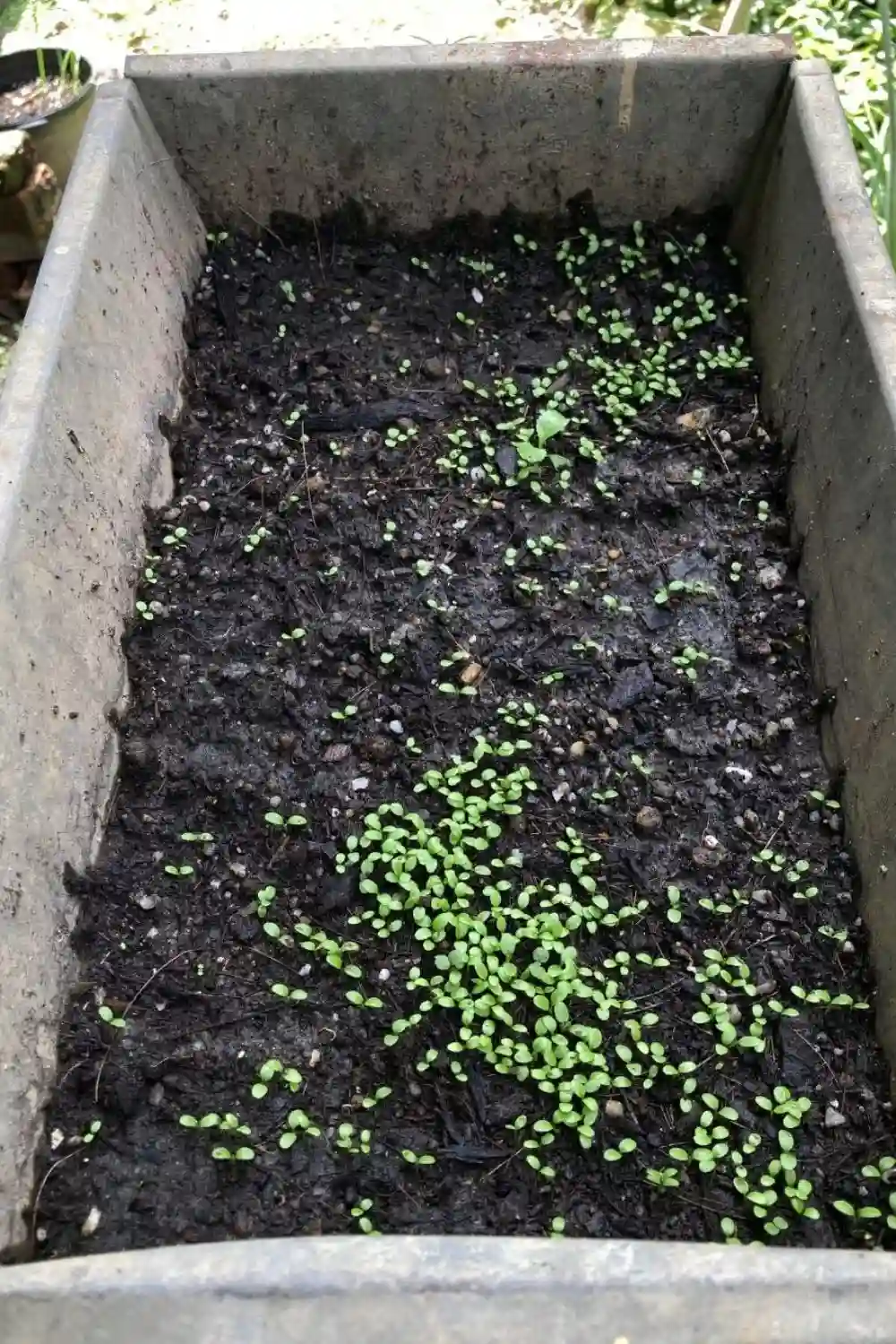
I grow culantro very simply. Instead of starting individual seedlings and transplanting them, I sprinkle the seeds directly over the surface of the container and let them grow together in a dense patch.
Culantro Seeds I Found on Amazon
If you want to start culantro from seed, these HOME GROWN Culantro Seeds are an option I found on Amazon. The packet contains 720 seeds and is marketed for growing culantro at home.
I start with moist potting mix, scatter the seeds fairly evenly across the surface, and cover them only very lightly. Then I keep the soil consistently moist while they germinate.
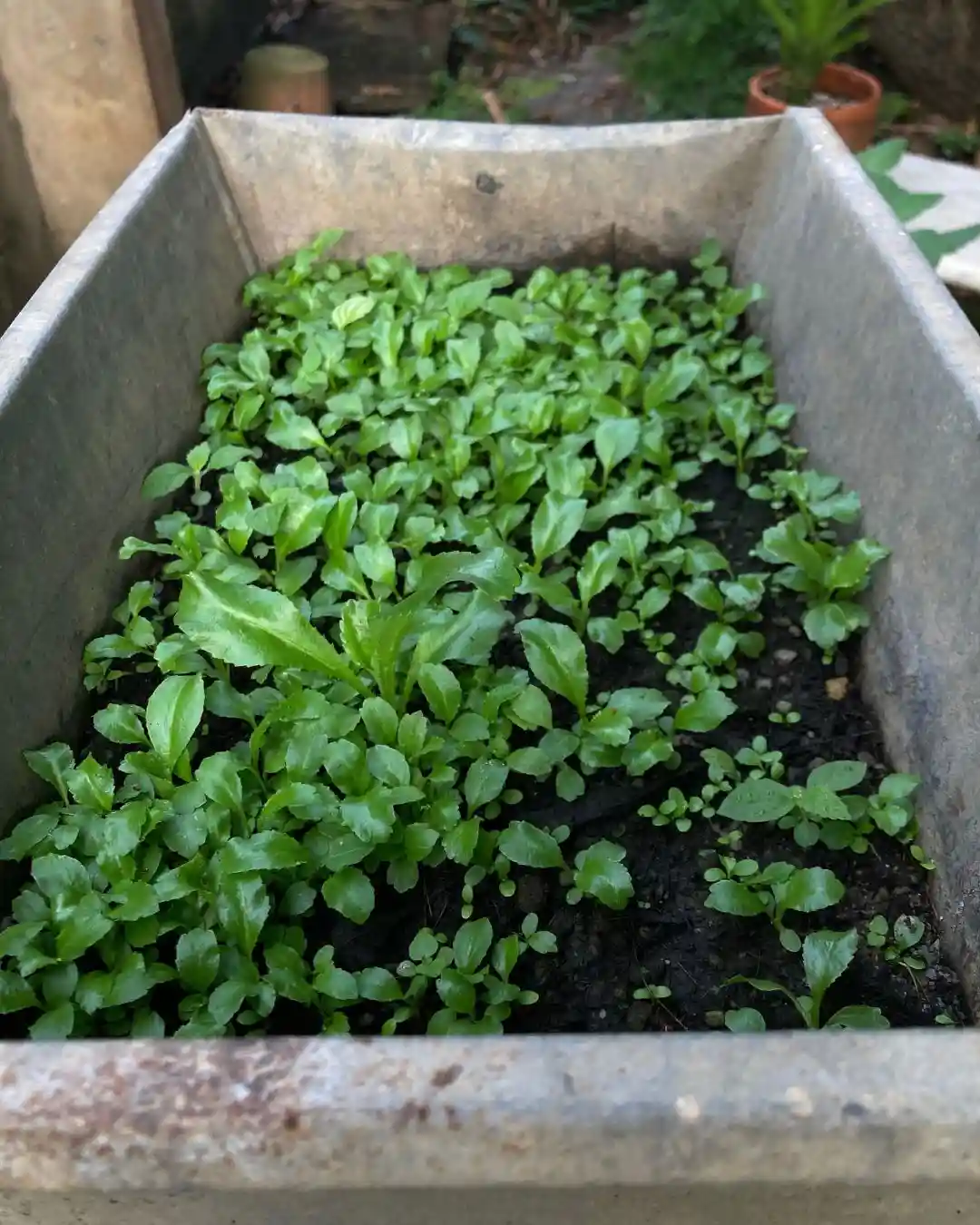
The seedlings come up quite small and close together, almost like grass at first. I do not worry about separating every plant. I let them establish as a group and harvest from the patch as it fills in.
I also keep my culantro in a shaded area, which works well here in Trinidad. The plants stay protected from the strongest tropical sun while still getting enough light to grow steadily.
If you are growing culantro indoors or in a darker area, my guide to the best grow lights for herbs covers lighting options for herbs and seedlings.
How Often Should You Water Culantro?
Culantro prefers consistent moisture.
Container-grown herbs can dry out quickly, especially in hot or breezy weather, so check the soil regularly.
Water when the upper layer of potting mix starts to lose moisture.
Water thoroughly enough for some excess water to drain through the bottom of the container.
Try to avoid repeatedly allowing the soil to become completely dry and then soaking it heavily.
Does Culantro Need Fertilizer?
Culantro does not need extremely heavy feeding.
If you planted it in fresh potting mix that already contains nutrients, you may not need to fertilize immediately.
For an established container plant, a light application of a balanced fertilizer can support continued leafy growth.
Always follow the fertilizer directions instead of increasing the amount in an attempt to make the plant grow faster.
How to Harvest Culantro
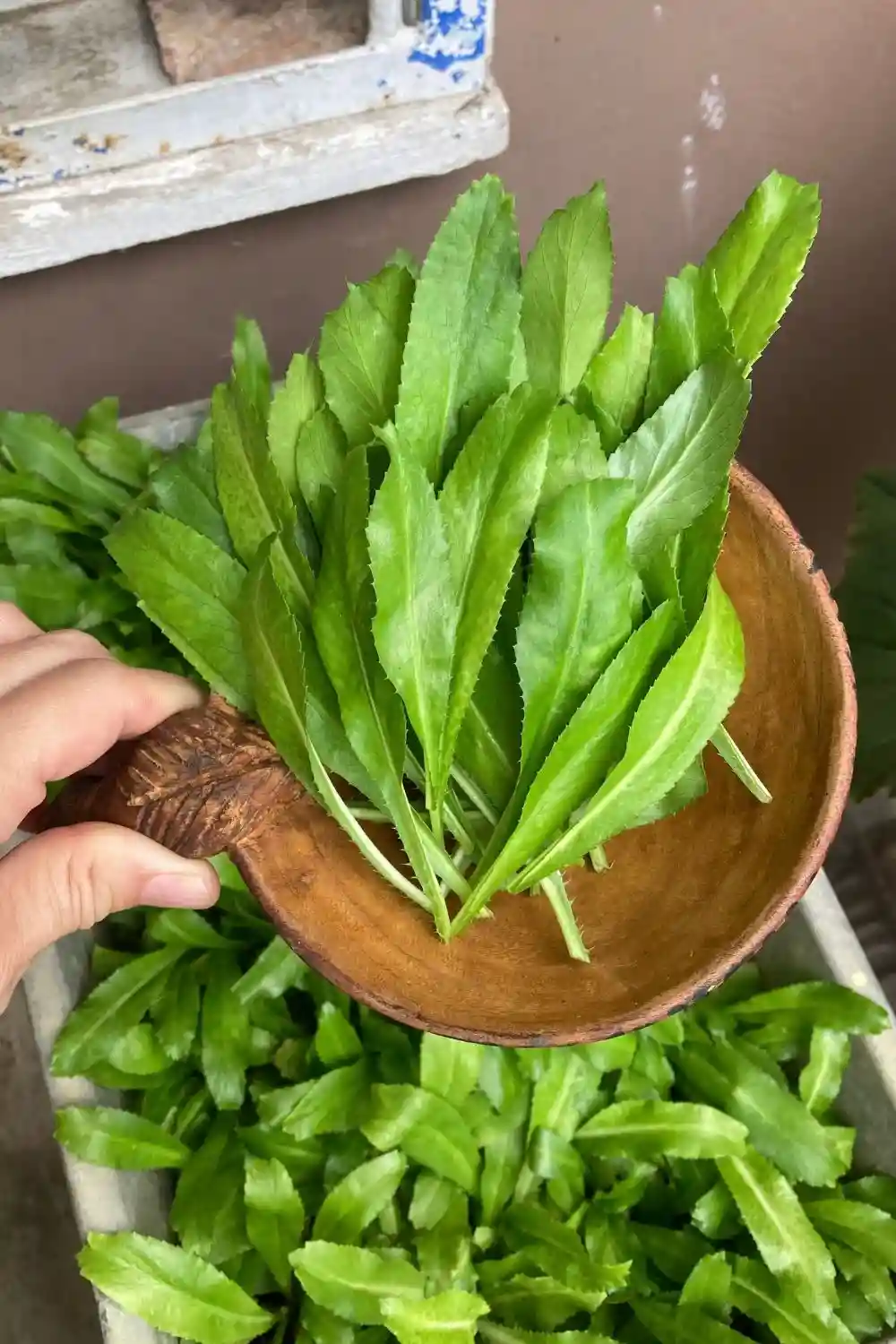
Harvest the older outer leaves first.
Cut the leaves close to the base while leaving the younger center growth intact.
This allows the plant to continue producing new leaves from the middle of the rosette.
Fresh culantro can be chopped and used in:
- Soups
- Stews
- Rice dishes
- Sauces
- Chutneys
- Caribbean green seasoning
- Marinades
You do not need to harvest the entire plant at once.
Taking a few outer leaves at a time lets you continue harvesting over a longer period.
What to Do When Culantro Flowers
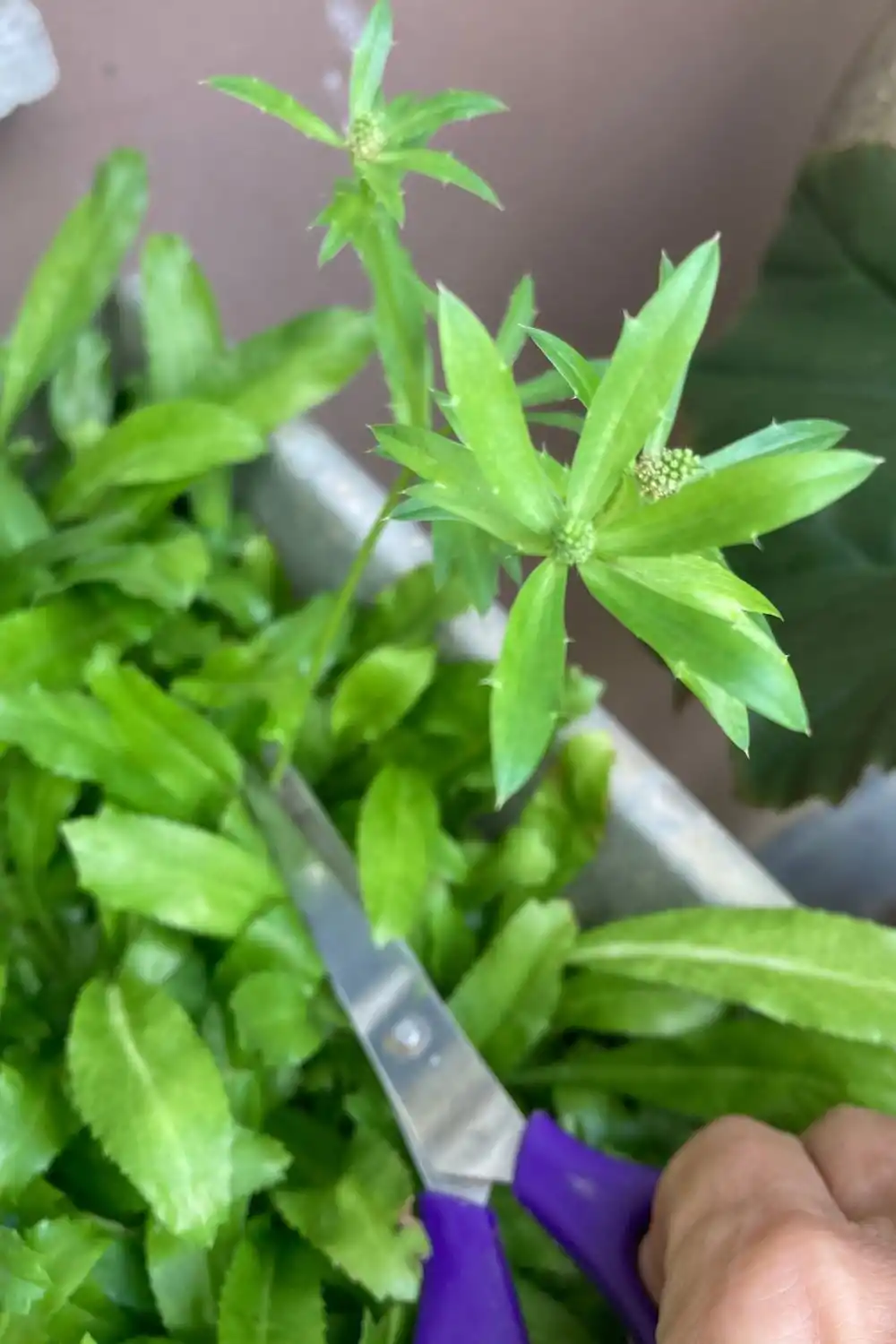
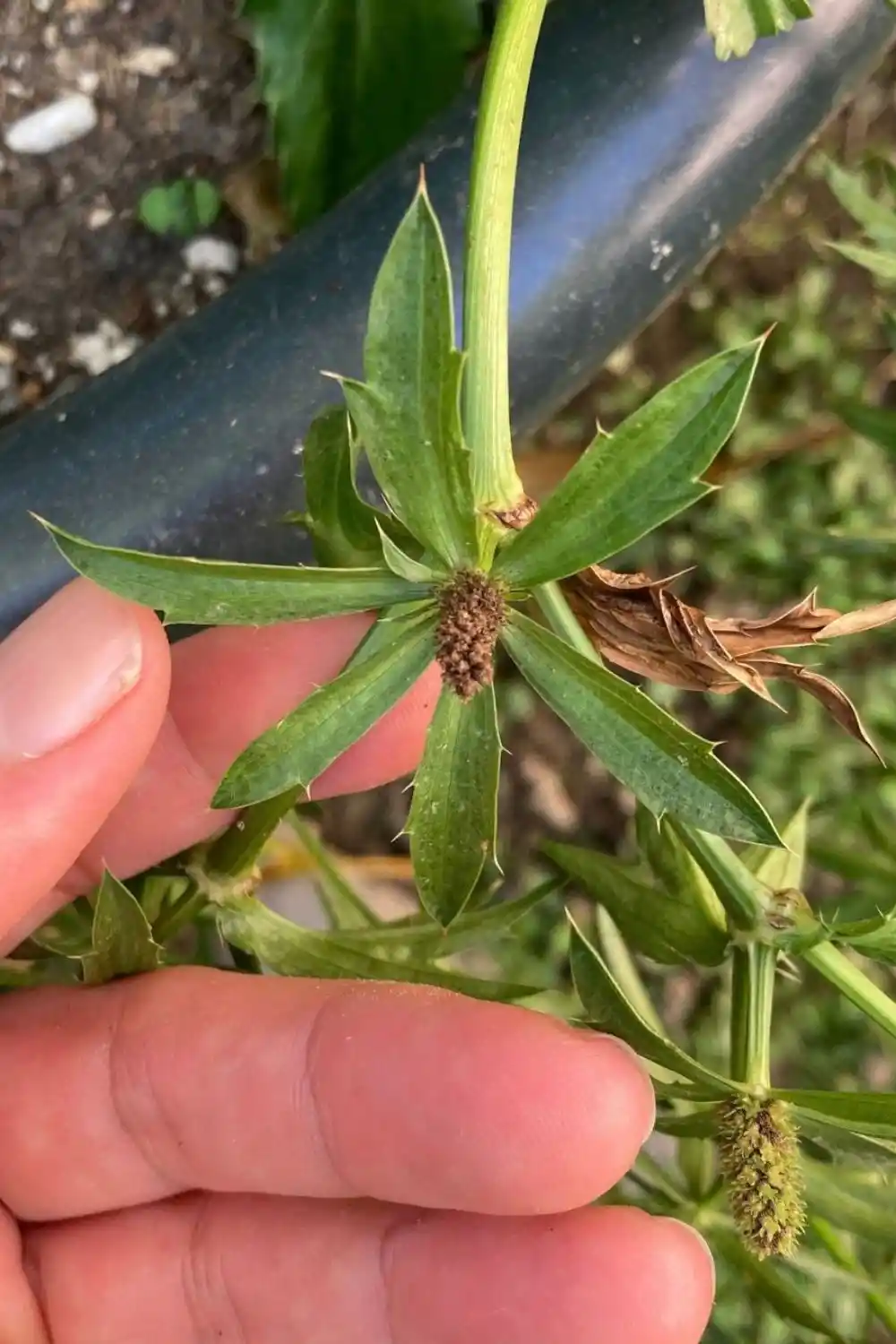
As culantro matures, it may send up a tall flower stalk.
Heat and strong sunlight can encourage the plant to flower sooner.
If your main goal is producing leaves, you can remove the flower stalk while it is young.
This can help the plant continue directing more of its energy into leafy growth.
You can also allow a healthy plant to flower and set seed if you want to collect seeds for future plants.
Culantro vs Cilantro
Culantro and cilantro are often confused because they have a similar aroma and flavor, but they grow very differently.
Culantro has long, saw-toothed leaves that grow from a low rosette. It tolerates warm conditions well and prefers some shade.
Cilantro has soft, delicate leaves and usually prefers cooler growing conditions. It tends to bolt quickly when temperatures become hot.
For gardeners in hot climates, culantro can be a practical alternative when cilantro becomes difficult to keep leafy.
Common Culantro Growing Problems
Leaves Wilting
If the leaves wilt regularly, check whether the container is drying out too quickly.
Also look at how much direct sun the plant receives.
A culantro plant growing in intense afternoon sun may do better in a slightly shadier position.
Culantro Flowering Too Early
Heat, strong sunlight and plant maturity can encourage flowering.
If you want to continue harvesting leaves, remove the developing flower stalk and consider moving the container into partial shade.
Slow Growth
Very young culantro seedlings can seem slow at first.
Make sure they have steady moisture, enough growing space and soil that drains without drying out immediately.
Is Culantro Good for Small-Space Gardening?
Yes.
Culantro is one of the herbs I particularly like for a small tropical garden because it can be grown in a container, does not require a large garden bed and produces useful leaves from a relatively small footprint.
It is also well suited to the kind of gardening I focus on here at Sansa Herbs: practical herbs that can be grown in pots, patios, small yards and everyday home spaces.
Frequently Asked Questions About Shadow Benny
What is shadow benny?
Shadow benny is the local Trinidad and Tobago name for culantro, Eryngium foetidum. It is a strongly flavored herb commonly used in Caribbean cooking, especially in green seasoning, soups, stews and sauces.
Is shadow benny the same as cilantro?
No. Shadow benny and cilantro have a similar flavor, but they are different plants. Shadow benny has long, saw-toothed leaves that grow in a low rosette, while cilantro has softer, parsley-like leaves and tends to bolt more quickly in hot weather.
What is the American name for shadow benny?
The name most commonly used in the United States is culantro. You may also see names such as sawtooth coriander, recao or long coriander.
How is shadow benny used in Trinidad?
Shadow benny is commonly used in green seasoning and added to soups, stews, rice dishes, marinades and sauces. A little goes a long way because the flavor is quite strong.
More Herb Growing Guides
Growing herbs in containers makes it easier to work with limited space and adjust conditions for each plant. Visit my Complete Growing Guides Hub for more step-by-step guides to herbs you can grow in pots and small gardens.