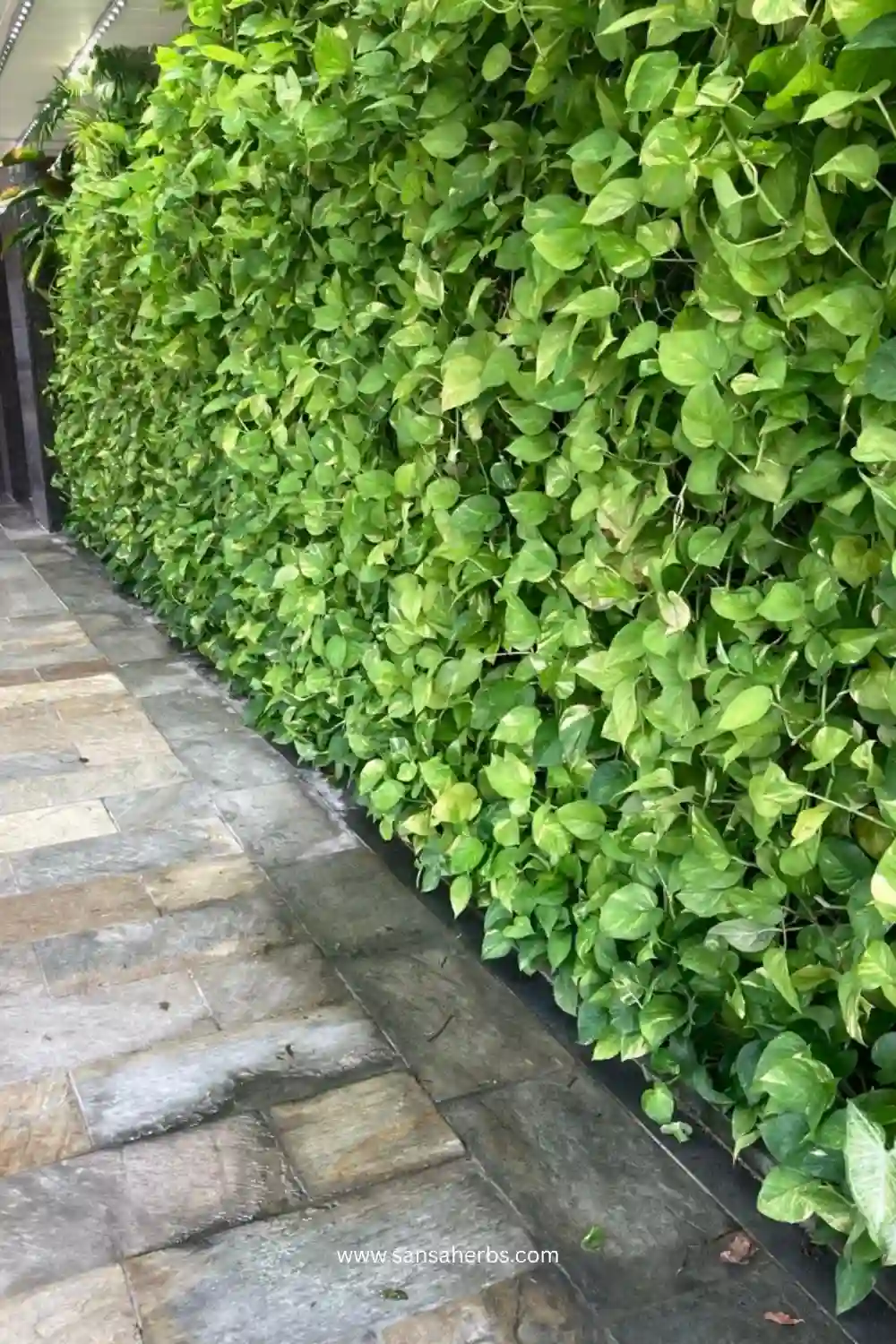
A pothos wall like this looks impossible to pull off at home, but it really comes down to three things done right: how the plants are mounted, how the vines are trained, and how consistent the lighting stays. Skip any one of those and you end up with bare patches instead of that full, cascading look.
Here’s the setup that gets you there.
Choose the Right Pothos Varieties for Your Wall
Not every pothos fills in the same way, and picking the right mix matters more than people expect. Golden pothos grows fast and forgives almost any lighting mistake, which makes it a solid base layer for a pothos wall. Marble queen and neon pothos add color variation once the base coverage is established, but both need slightly brighter light to hold their color instead of fading back to plain green.
A common mistake is planting all one variety in a grid pattern. It looks uniform for the first few weeks, then uneven as some plants grow faster than others. Staggering two or three varieties across the wall hides growth rate differences and gives the finished look more depth.
Start With the Right Mounting System for Your Pothos Wall
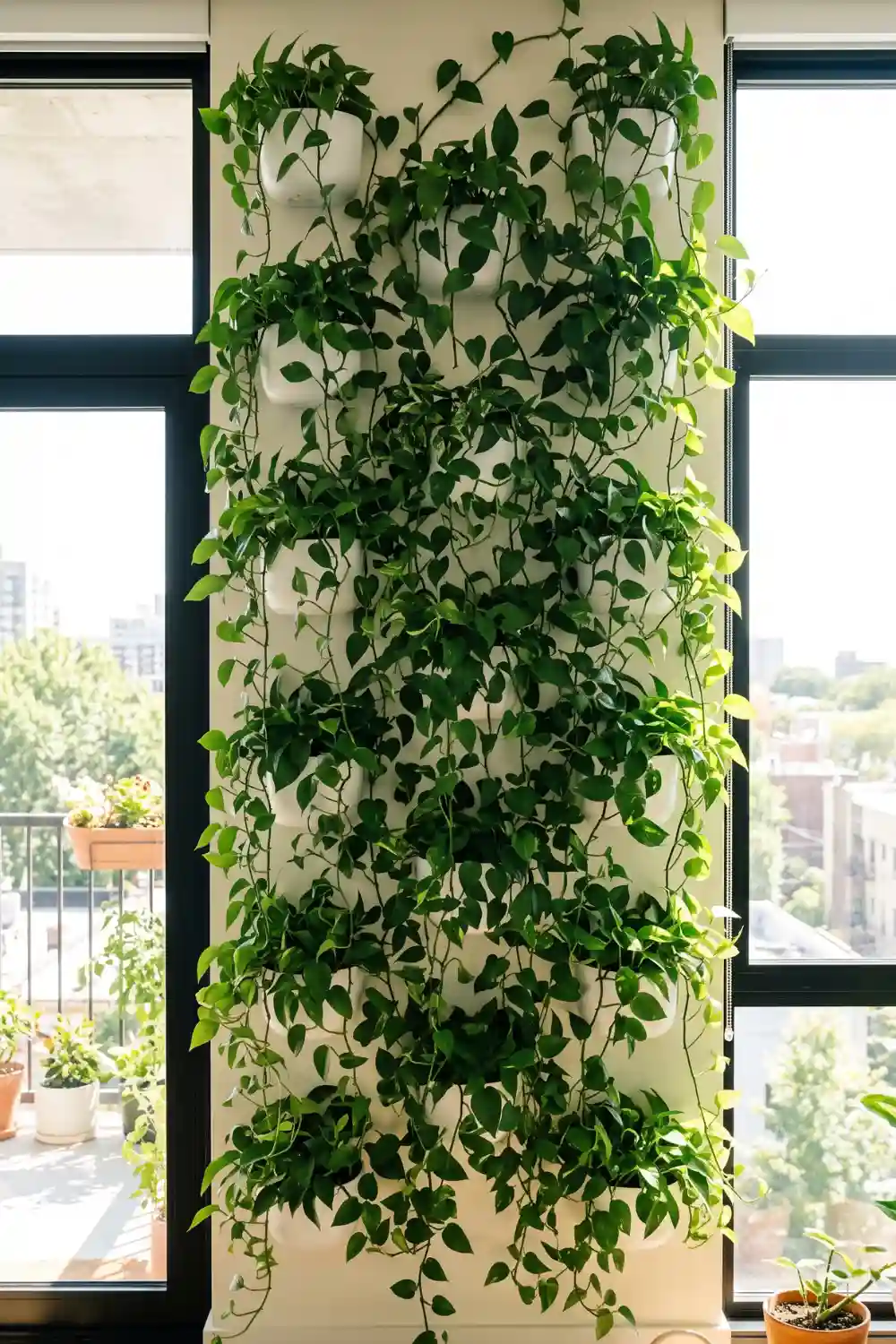
The most common mistake is hanging individual pots and hoping the vines fill in on their own. They usually don’t, at least not evenly, and you end up with awkward gaps plus water dripping down the wall every time you water.
Self-watering ceramic wall pots solve both problems at once. Each pot mounts individually and holds its own reservoir, so the roots pull water as needed instead of sitting in a soggy pocket or drying out between waterings. Staggering the pots at different heights instead of lining them up in a grid gives the wall a fuller, more natural look right from the start, and it hides the fact that pothos grow at different rates.
If you’d rather go with a felt pocket style instead of individual pots, a coco coir pocket planter is the budget option. It’s not self-watering, so it needs more attentive watering than the ceramic pots, and the coco liner isn’t a sealed barrier the way a drainage layer is. Water carefully and check the wall behind it occasionally, especially early on while you’re getting a feel for how fast it dries out.
Train the Vines So Your Pothos Wall Fills In Evenly
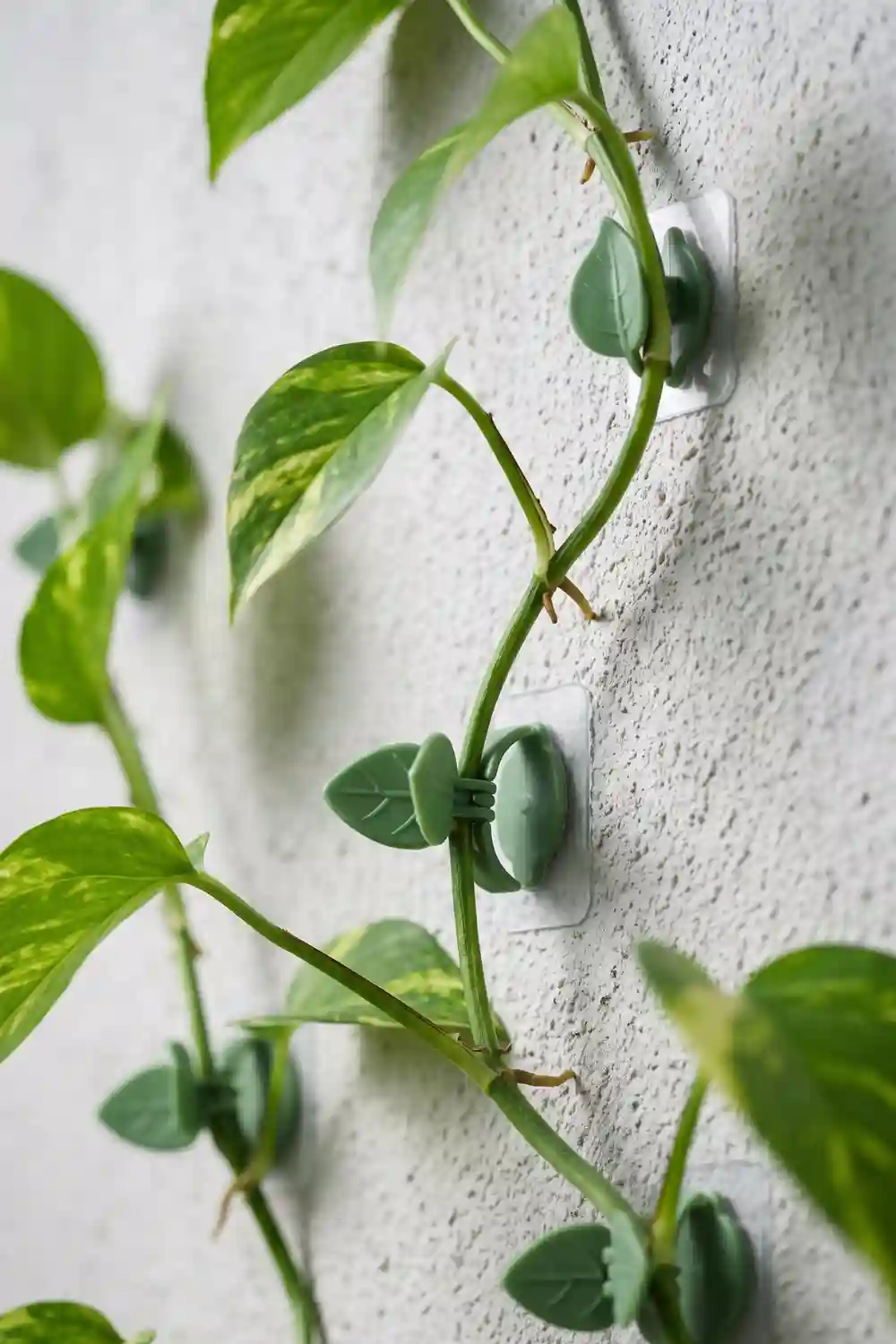
Pothos will climb on their own, but left alone they tend to droop straight down instead of spreading across the wall. Getting that dense, full coverage takes a little guidance.
Small adhesive hooks and leaf-shaped clips route the vines sideways as they grow, filling in the thin spots instead of leaving them bare. The clips are gentle enough not to damage the stems, and once the leaves fill in you can’t see them at all.
Get the Lighting Right for a Dense Pothos Wall
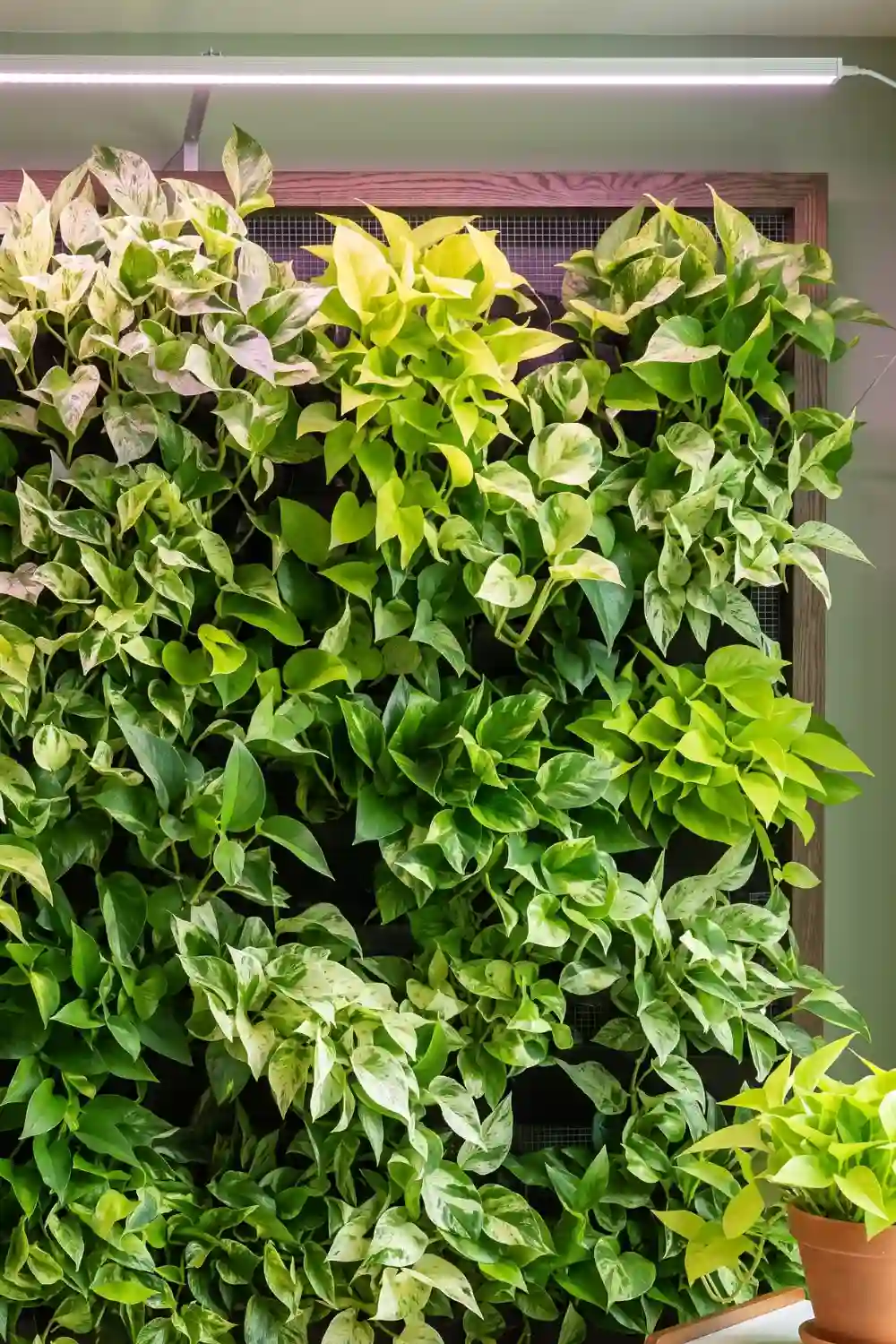
This is the part most people skip, and it shows. A wall positioned away from a window won’t get enough natural light to sustain that much foliage on its own, and the leaves stay small with flat color.
A slim LED grow light strip mounted close to the plants makes a real difference within a few weeks. Most strips attach with clips or a magnetic bar and double-sided tape, so they mount directly above or beside each cluster of pots instead of running along the ceiling. Fuller leaves, better color, faster growth. If a pothos wall isn’t getting several hours of bright natural light a day, a grow light isn’t optional. It’s what makes the wall look full instead of sparse.
Not sure which grow light to pick? See our full guide to the best grow lights for herbs.
Feed Consistently for Long Term Growth
Wall planters hold less soil than a regular pot, so nutrients run out faster. Feeding every other watering with a gentle liquid plant food is what keeps the leaves glossy instead of pale.
Skip this step and it shows. The wall will still grow, just slower and thinner than it could.
Common Pothos Wall Problems and How to Fix Them
Yellowing leaves near the base usually mean overwatering. If you’re using the coco coir pockets, they hold moisture longer than a regular pot, so watering on the same schedule you’d use for a normal houseplant tends to drown the roots. With the ceramic self-watering pots, yellowing more often means the reservoir isn’t draining between refills and needs a rinse. Either way, let the top inch of soil dry out between waterings and the yellowing typically stops within a couple weeks.
Bare patches that never fill in are almost always a light problem, not a plant problem. Before assuming a section is dead, move a grow light closer or extend the hours it runs before replacing anything.
Leggy, stretched out vines with leaves spaced far apart usually point to low light as well, just further along. A pothos wall that isn’t getting enough light will stretch toward whatever light source it can find instead of filling in densely.
Building Your Own Pothos Wall
None of this requires a green thumb, just the right setup from the start. Mount it properly, choose a mix of varieties, train the vines as they grow, keep the light consistent, and feed on a schedule. That’s really the whole system, and once it’s dialed in a pothos wall mostly maintains itself with a quick check every few days.
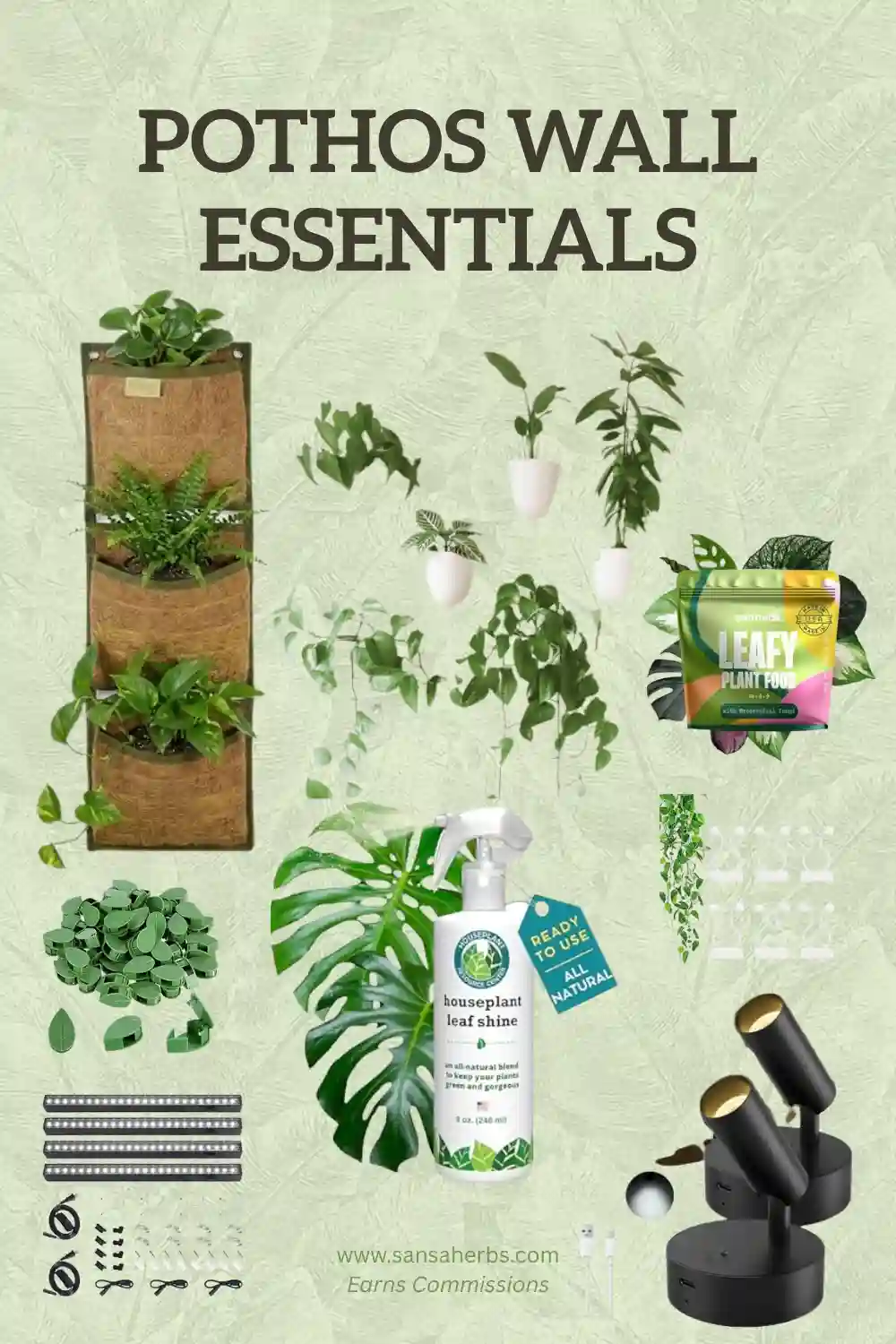
Below are the exact products you’ll need to recreate this look, from the wall planters to the grow lights.
Pothos Wall Essentials